Soft banks standard gear can't enter
Unstable shoreline edges that sink or erode under conventional equipment weight.
Water Raptor uses Truxor amphibious equipment in Utah where access is the main constraint, not cutting speed. When a pond is too shallow for boats and bank soils will not support tracked machines, this platform lets crews work without tearing up the edge.
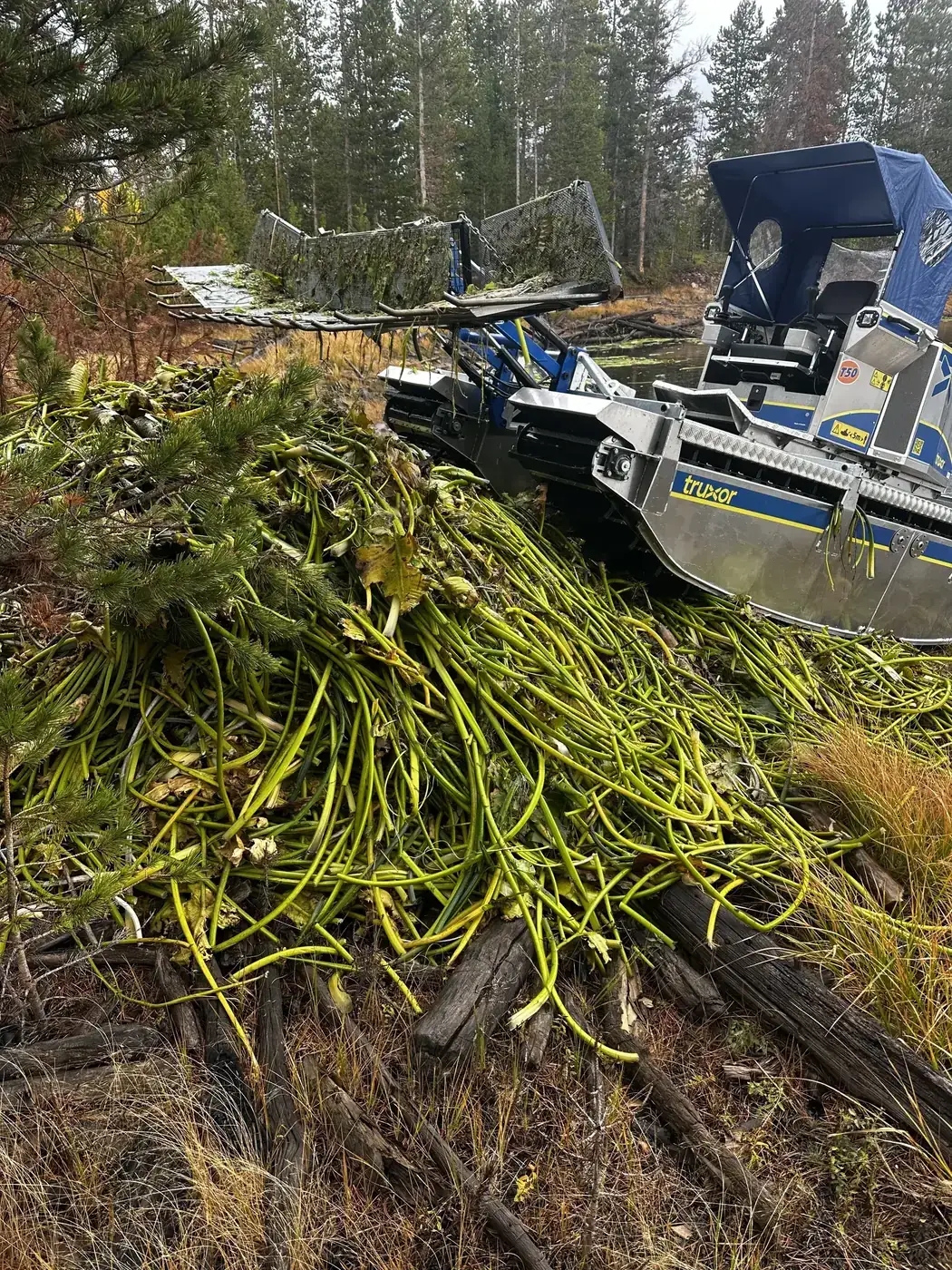
Sites where standard equipment reaches the property but cannot safely reach the vegetation line.
Unstable shoreline edges that sink or erode under conventional equipment weight.
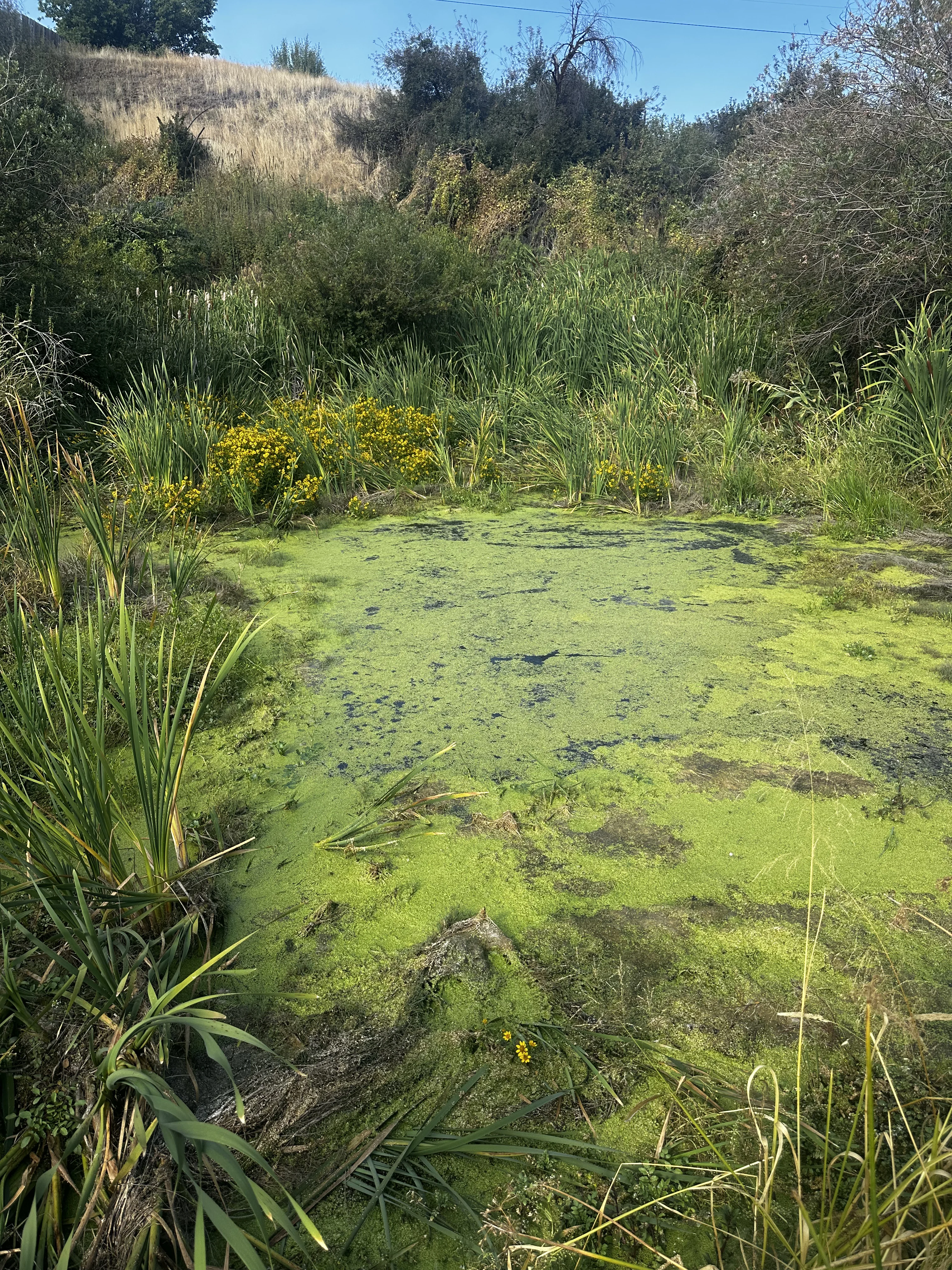
Water depth too low for watercraft but too wet for land equipment — the classic access gap.
Tight waterways where full-size equipment can't maneuver to reach vegetation.
Areas where land meets water in soft, unstable substrate that typical machines can't traverse.
Ponds and basins surrounded by landscaping, structures, or soft ground with no dry approach.
Growth established in the soft, shallow fringe where both land and water methods fall short.
Access comes first: get into the transition zone, clear it, and get material out without creating a bigger shoreline repair problem.
Check depth, bank firmness, and entry width before committing equipment and crew time.
Launch from workable ground and transition directly into the shallow fringe where most choke points form.
Cut and collect in narrow, soft sections where larger machines cannot turn, stage, or hold traction.
Haul biomass out with minimal rutting, since a cleaned channel does not help much if the bank fails afterward.
Good fit for Truxor amphibious work
When another service may fit better
Most Truxor jobs are chosen for control, not raw throughput. In narrow Utah approaches with low depth and soft shoulders, heavier equipment can lose time fast in recovery and cleanup.
The tradeoff is straightforward: smaller platform, tighter working envelope, cleaner access result. Crews can clear transition-zone growth and preserve usable shoreline infrastructure instead of widening disturbance just to get equipment in.
Related: Aquatic harvesting · Shoreline clearing · Invasive plant removal
Answers about access limits, equipment fit, and where this method outperforms larger machines.
Truxor amphibious work uses a specialized machine that can operate in shallow water and soft-bank transition zones where standard land equipment and boats are limited.
We use Truxor when access is the primary constraint: shallow depth, unstable banks, narrow channels, or no practical staging route for larger conventional equipment.
Yes. With the right attachments, Truxor can cut, collect, and clear vegetation in difficult shoreline and shallow-water zones where invasive growth often concentrates.
Typically yes. Amphibious platforms are used to reduce bank disturbance and compaction risk compared with heavier tracked or wheeled machines in soft edge conditions.
Yes. Truxor projects are available throughout Utah where site conditions make amphibious access the most practical and effective option.
Tell us what is growing, where it is, and how access looks. We will recommend a practical harvesting, removal, treatment, or support approach.
No generic promises. We review your site details first, then recommend a scope path that matches actual field constraints.
Request a Quote