8,500 lb
machine operating weight class
Truxor Hub
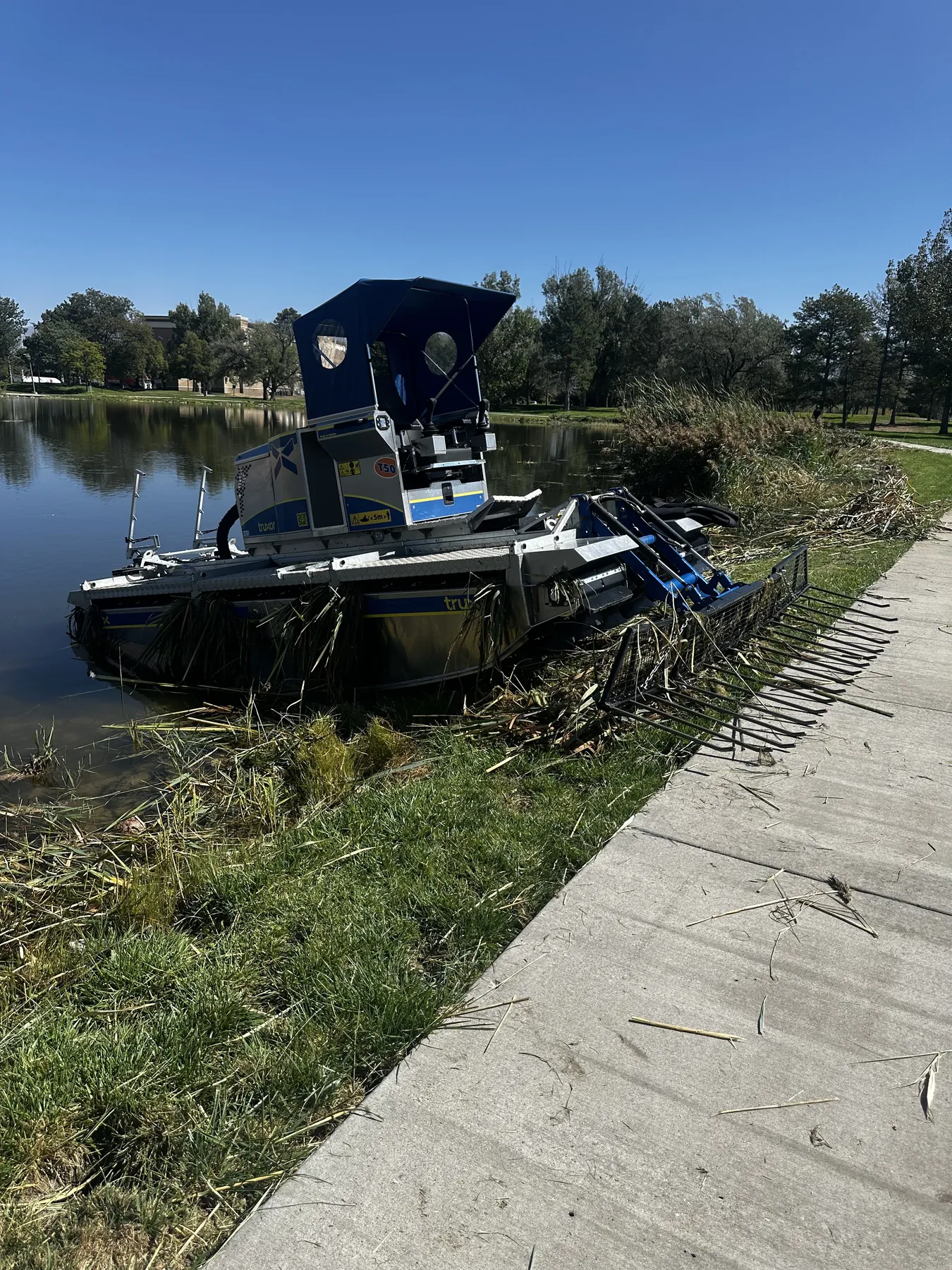
This is Water Raptor's amphibious platform for the shoreline edge, where soft banks, shallow water, and dense growth make conventional equipment awkward. Start in the showroom, then jump to the guide that matches your question.
8,500 lb
machine operating weight class
Shallow edge
designed for shoreline transitions
1 platform
many attachment configurations
Low impact
controlled movement near sensitive banks
The platform is most useful when the site challenge is equal parts access and removal. These are the fundamentals before choosing attachments or alternatives.
Truxor is most useful where dry bank becomes shallow water and standard machines run out of safe positioning options.
The chassis brings access. The attachment setup defines the task: cutting, harvesting, handling, and targeted cleanup.
Crews can adapt methods across changing shoreline geometry without swapping entire equipment classes every few hundred feet.
Open each capability to see practical fit and jump to the right deep-dive page.
Cut and reclaim lanes through emergent growth so edges become serviceable again.
Best for: Cattail walls, shoreline bottlenecks, and neglected access corridors
Open related pageHandle cut material so debris does not remain in coves, corners, and near infrastructure.
Best for: Recurring growth in retention and lake edge zones
Open related pageOperate in shallow or soft transitions where larger land equipment loses efficiency.
Best for: Mixed shoreline geometry and constrained approaches
Open related pageEach Truxor page has a distinct editorial job so visitors can move from curiosity to confident planning.
Persuasive, field-based reasoning for when this machine beats common alternatives.
Open pageCatalog-style guide to tool options and where each attachment performs best.
Open pageDecision matrices with honest strengths, constraints, and fit scenarios.
Open pageCase-study style scenarios showing why Truxor was selected and what changed.
Open pageConversational answers to planning, logistics, and site-fit questions.
Open pageMove from research to execution with Water Raptor field service options.
Open pageIf two or more items below are true, Truxor is usually worth evaluating before final method selection.